
Silicone sealing plug is an industrial accessory used to fill holes, prevent dust or liquid from penetrating, and is commonly used in the manufacturing and maintenance of electronic devices, automotive parts, and hardware products. Its core function is to achieve dust and water resistance through physical sealing, while protecting the internal structure from environmental factors. Based on aperture adaptability, material characteristics, and process differences, this type of product can be subdivided into multiple specifications. Among them, the T-shaped design of the plug has become a commonly used choice in industrial scenarios due to its convenient installation and strong sealing performance.
1、 Technical principles and structural design:
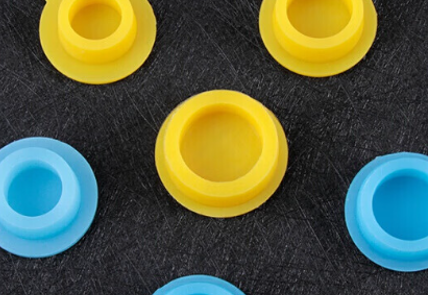
Silicone sealing plug is mainly made of silicone rubber and is integrally formed through injection molding process. Silicone rubber has the characteristics of high temperature resistance, aging resistance, and strong chemical stability. It can maintain elasticity in environments ranging from -50 ℃ to 200 ℃ and is not easily deformed or cracked. The T-shaped structure consists of a top disk and a bottom cylinder. The disk is used to cover the hole opening, while the cylinder is inserted into the hole to form a seal through interference fit. Its surface is usually designed to be smooth or with anti slip patterns to meet different installation requirements. The main colors are white and black, making it easy to distinguish between different purposes or environmental adaptability.
2、 Core functions and application scenarios:
The main function of this product is dust and water resistance, which can effectively prevent dust, water droplets, and oil stains from entering the interior of the equipment. In the electronics industry, it is commonly used to seal the heat dissipation holes, interface holes, or debugging holes of equipment casings to prevent internal circuits from being affected by moisture and short circuiting; In the automotive industry, it is used to seal car lights, sensors, or wiring harness holes to prevent rainwater or sediment from entering; The hardware industry is mostly used for sealing holes in pipelines, valves, or mechanical parts to reduce the risk of oxidation and corrosion. Its applicable aperture is 9mm, which needs to be strictly matched with the target hole to ensure sealing effect.
3、 Usage and precautions:
During installation, it is necessary to clean the surface of the hole to ensure that there is no oil or debris. Then, insert the T-shaped cylindrical part vertically into the hole until the disc is completely in contact with the hole opening. If disassembly is required, gently rotate or use tools to assist in pulling out to avoid forcefully pulling and tearing the silicone gel. The product adopts a packaging form of 1000 pieces/pack, which is convenient for batch storage and retrieval. It should be noted that this product does not support customized processing and only provides standard specifications. Users need to choose the appropriate model based on the actual aperture to avoid affecting the sealing performance due to size deviation.
4、 Technical advantages and actual performance:
Compared to traditional rubber or plastic plugs, silicone material has a longer service life and more stable physical properties. The injection molding process ensures the consistency of product dimensions and reduces the risk of seal failure caused by burrs or deformation. In terms of dust and water resistance, such products usually meet the IP67 standard (short-term immersion does not affect functionality), meeting the needs of most industrial scenarios. Its mass production mode also reduces the cost of individual pieces, making it suitable for large-scale application scenarios.